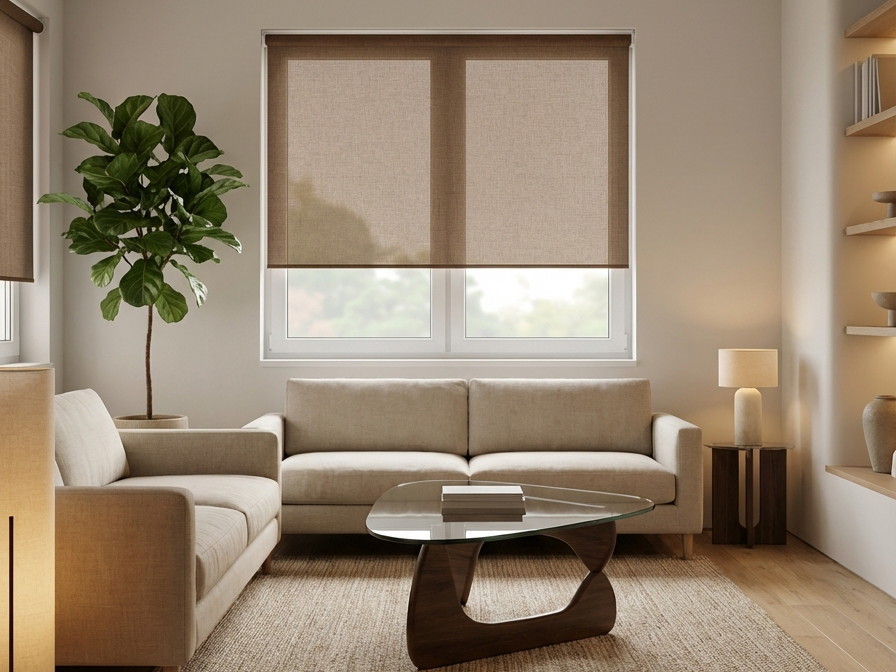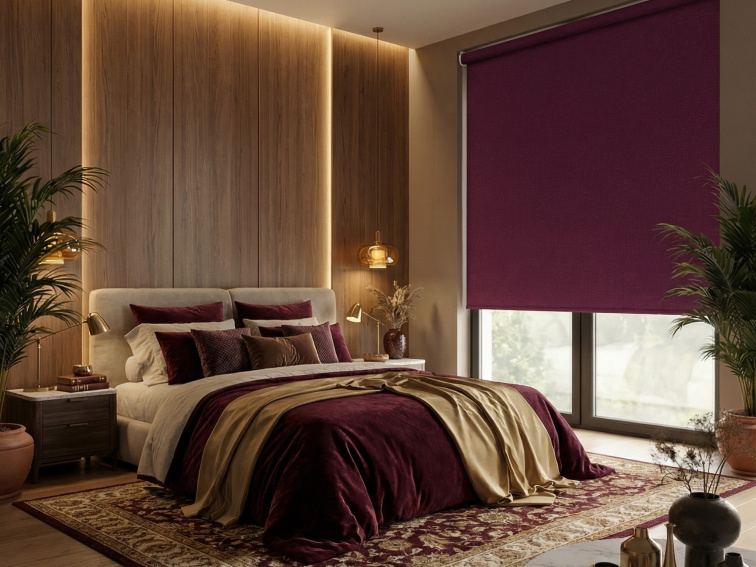
How to choose a fabric roller blind: 7 questions to ask before you order
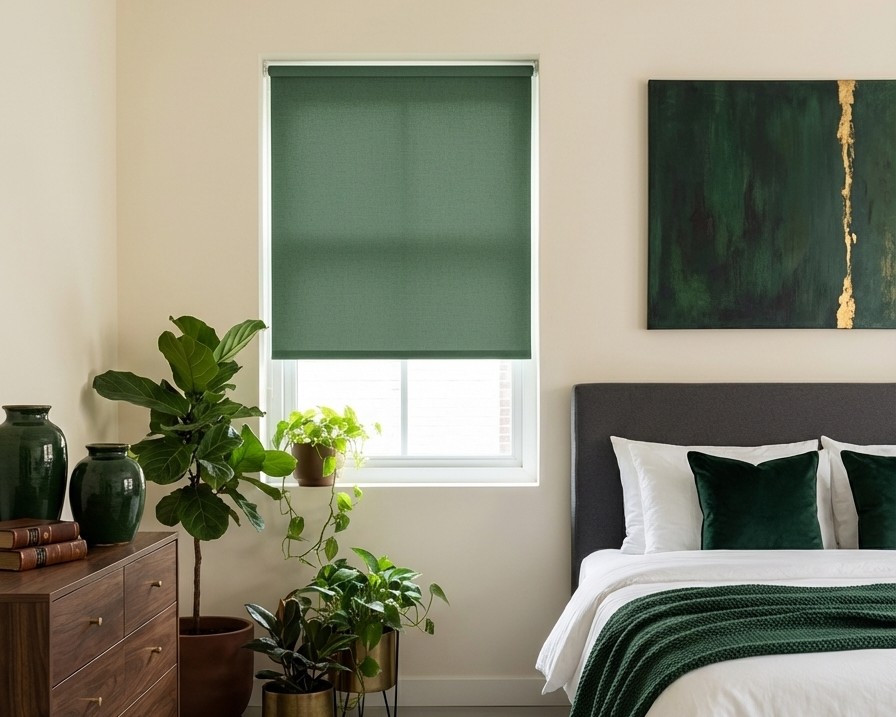
Ordering a fabric roller blind seems simple. You select the size, color, type of fabric, and you're done. But once you install the blind and start using it daily, you'll see if you made the right choice. In the evening, you sit in a lit room and realize that neighbors can see inside. Or the morning sun wakes you up even though you wanted to sleep in. And that's precisely what no one wants - a blind that doesn't fulfill what you expected of it.
Good news? Most problems can be avoided if you ask yourself 7 key questions before ordering. Not technical, not complicated - just those that truly decide whether the blind will work. In this article, we will guide you through exactly those questions, helping you choose a blind you will be satisfied with in the morning, evening, and in a few years.
1. How much light do I want in the room during the day?
This is the basis of everything. Your answer to this question directly determines the type of fabric you need.
Consider your daily routine:
- Do you spend a lot of time in the room during the day and need natural light?
- Or do you struggle with the sun being too intense and overheating the room?
- Do you have a desk in the room where reflective light bothers you?
Here come the basic types of fabrics:
- Transparent fabrics let in the maximum light - the room remains airy and bright, as if you had a soft textile screen.
- Translucent fabrics are the most common choice because they offer the best of both worlds. They gently filter intense sun rays and create pleasant diffused light.
- Blackout fabrics block most light and give you complete control over lighting. You can create an environment from deep twilight to darkness suitable for sleeping.
Without answering this question, it's useless to worry about color or price - the type of fabric is always the first step.
Practical tip: If you're not quite sure how much light you want, a translucent fabric is almost always a safe choice. It's versatile enough for most situations.
💡 Want to know more about the differences between types of fabrics? Read our detailed article How to choose the right fabric for fabric roller blinds: A practical guide to functionality and design.
2. How much do I care about privacy?
During the day, everything can work fine, but in the evening the situation often changes. Once the room is lit, the differences between various types of fabrics suddenly become very visible.
Ask yourself these questions:
- Do I live on the ground floor with windows facing the street or sidewalk?
- Do neighbors have a direct view into my windows?
- Do I spend time in the room in the evening with the lights on?
What various fabrics can achieve:
- Transparent fabrics provide privacy during the day when it's brighter outside than inside. In the evening with the lights on, you're perfectly visible.
- Translucent fabrics provide basic evening privacy - only dim silhouettes and movement are visible from the outside, but no details.
- Blackout fabrics provide maximum privacy in all circumstances. You can't see inside from the outside even with the lights on.
If you live on the ground floor, close to neighbors, or near a busy street, this is a question worth not underestimating.
3. For which room am I buying the blind?
One blind cannot work the same everywhere because each room has different priorities.
Bedroom: The priority here is quality sleep. A blackout blind allows you to sleep even during the day, provides protection from the morning sun, and complete evening privacy.
Living room: Here, a balance between light and privacy is sought. A translucent blind is the most common choice as it solves the need for daylight and evening privacy at once.
Study: If you work at a computer, you need stable lighting without glare. A translucent blind excellently filters direct sunlight.
Tip: Transparent fabrics are ideal for spaces with a view into the garden or nature, where privacy is not a problem.

4. Where do the windows face and how does the room behave during the day?

South and west-facing windows: They receive the most intense direct sunlight. In the summer, the room overheats, and the afternoon sun can be blinding. A high weight translucent fabric or blackout with a white back are more practical choices.
East-facing windows: Morning sun can be intense but in the afternoon, the room only receives indirect light. A translucent fabric is usually sufficient unless the morning sun wakes you too early.
North-facing windows: They receive only indirect, gentle light all day. If you want to maintain maximum brightness, a translucent or even transparent fabric will work great.
5. What color fabric should I choose to ensure it works long-term?
Fabric color is not just a matter of design - it also affects how you feel in the room and how easily the fabric can be maintained. Generally, the blind should match the overall style of the interior, not just a specific accessory.
Light colors (white, beige, light gray) reflect more light and heat back outside, which helps keep the room cooler in the summer. They optically enlarge the space and appear airy. On the other hand, they can be more prone to visible dirt.
Dark colors (anthracite, black) absorb more light and heat, so the room can be warmer in the summer. They provide the interior with structure and depth, but in small rooms, they can compress the space a bit. The advantage is that small dirt is not as visible on them.
Neutral colors (shades of white, gray, beige) are timeless, easily combinable with any furniture, and in case of interior changes, you won't have to change the blinds. A safe bet.
Bright colors can be beautiful and give the room character, but they are harder to combine when changing the interior. It's good to use them carefully.
6. Where am I installing the blind: inside the window recess or in front of it?
The method of installation affects not only the appearance of the blind but also its functionality - especially for blackout fabrics.
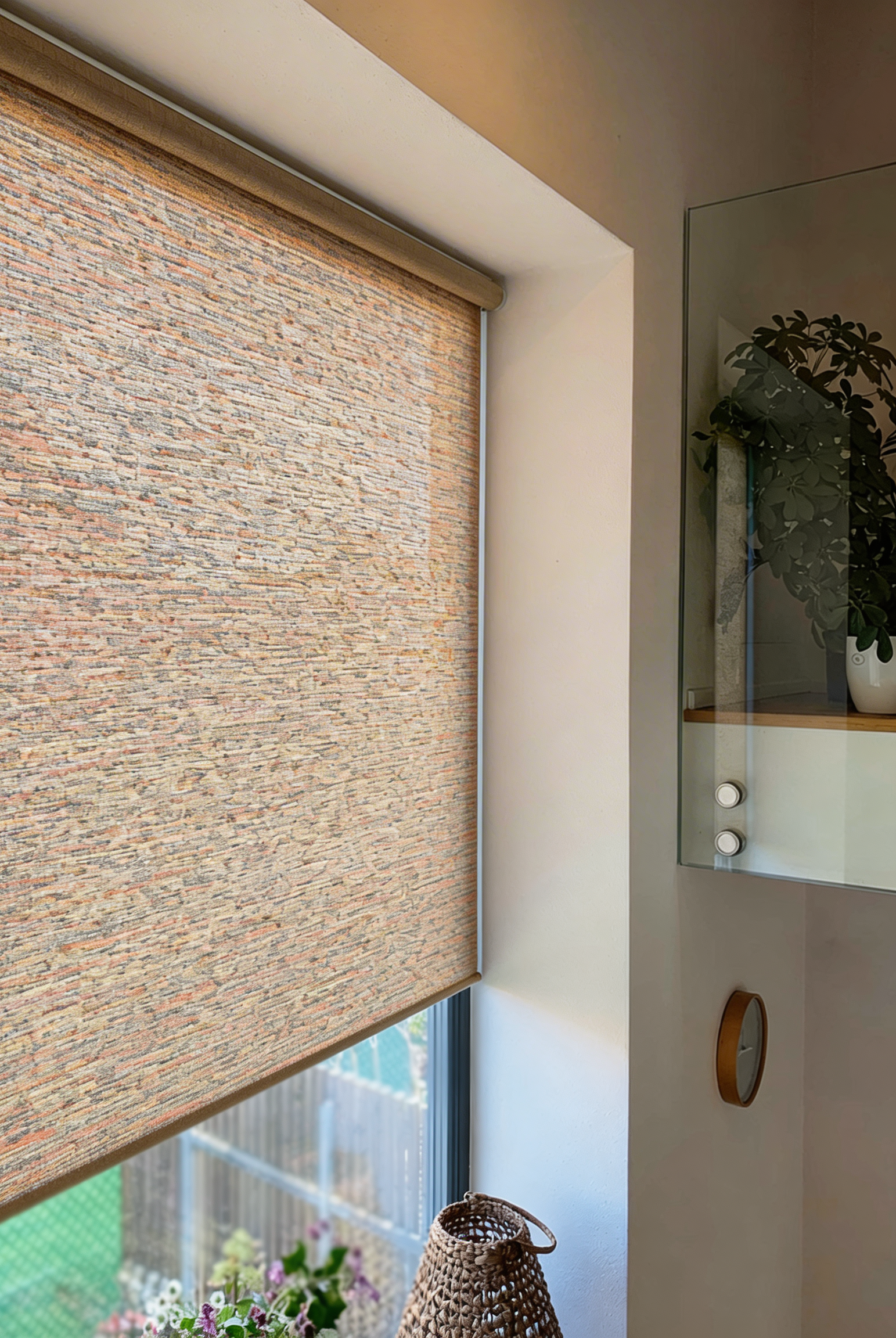
Installation inside the window recess: The blind is built directly into the window recess, which looks clean and minimalist. However, there are small gaps around the edges of the blind that let in light. For most people, the deep twilight is sufficient.
Installation in front of the window: The blind covers the entire opening, including the frame, which minimizes light penetration on the sides - ideal for blackout.
Practical tip: If you're not sure how to correctly measure the window for the selected type of installation, check out our guides.
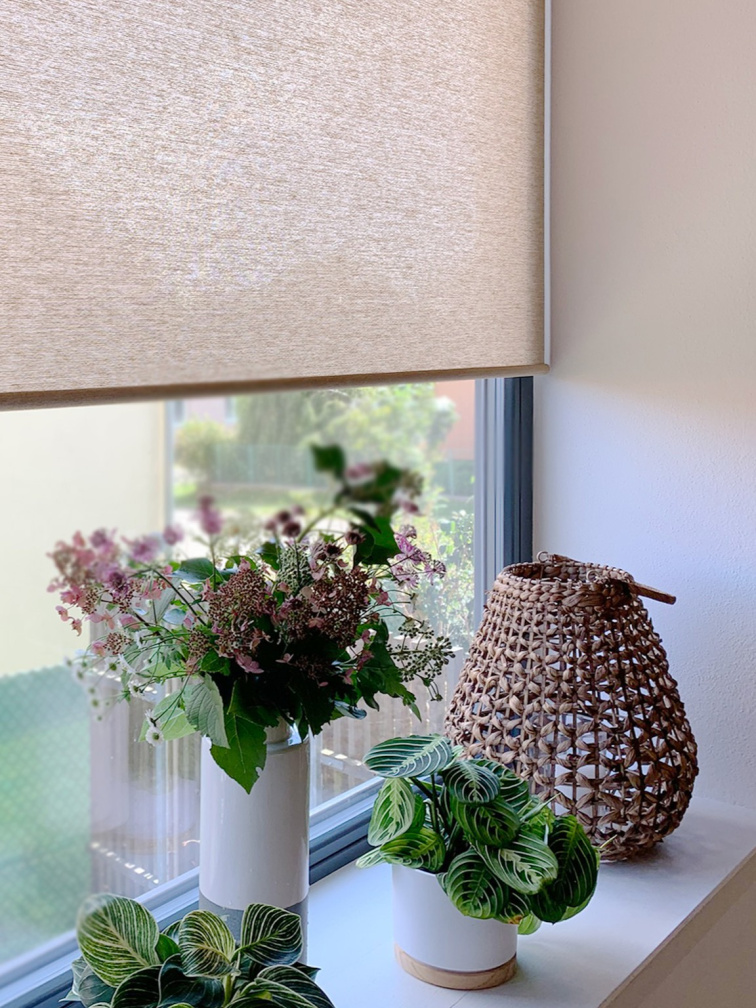
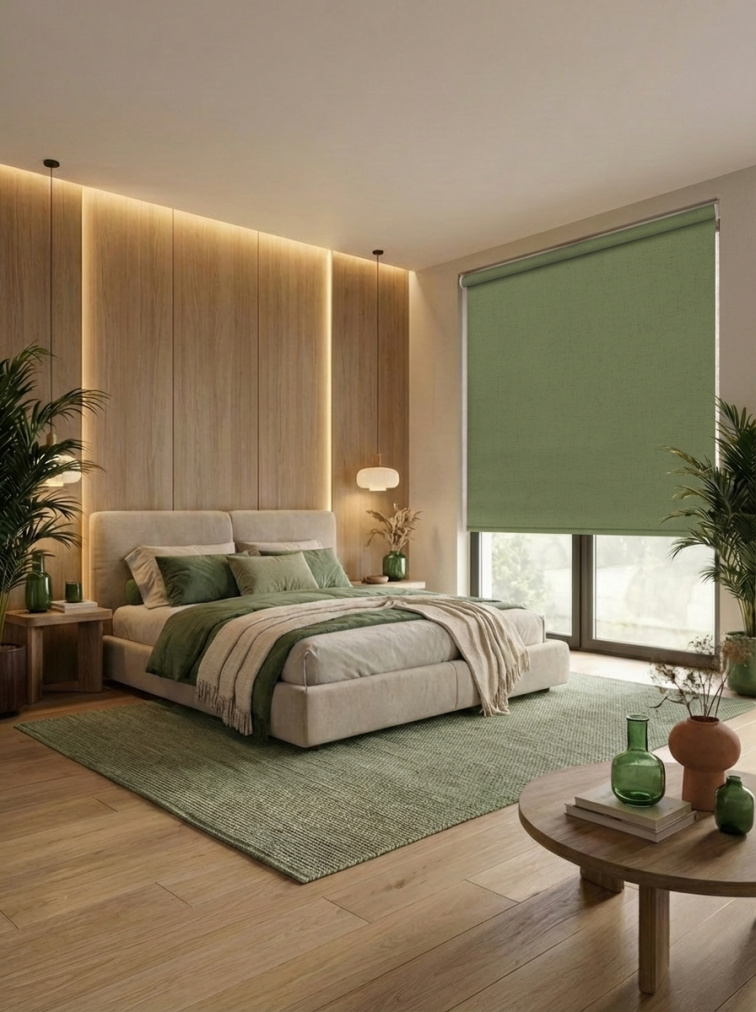
7. How do I want the blind to unroll?

This question may sound a bit technical, but it's about how the blind will look when mounted and how it will function in everyday use.
Fabric closer to the window (standard unrolling):
The fabric unrolls towards the glass. The blind appears more compact and is closer to the window. However, if you have handles or other elements at the window, the fabric may lean against them.
Fabric towards the room (contra unrolling):
The fabric unrolls away from the glass. The advantage is that the fabric does not obstruct handle manipulation. For blackout fabrics, this unrolling may also slightly improve blackout as the fabric fits more closely to the frame.
Check your choice at home - samples will make things clear
Even if you now have answers to all the important questions and know what you need, one thing still holds true: fabric behaves differently in the morning, afternoon, and evening, in natural and artificial light. A photo or description cannot replace a view of the fabric right at your window.
At ACCUBLIND, you can order fabric samples and test them directly at your window. Place the sample against the window, look through it during the day and evening under a lit lamp, check if the color suits you, and how much light it lets through. And good news? The price of samples will be deducted from the final purchase of blinds, so it's an investment that pays off.
Conclusion: The right questions = the right choice
Choosing a fabric roller blind doesn't have to be complicated. If you ask the right questions at the beginning, you'll avoid compromises and and second-guessing later. The result will be a blind that works exactly as you expect - in the morning, evening, and for many years to come. Now, it's just a matter of choosing the specific fabric and color that will match your home and enhance your daily routine.
Are you ready to choose the right one? Browse our collection of fabrics and if in doubt, order samples - they are minutes that will save you years of satisfaction.
FAQ
What type of fabric for a roller blind is the most versatile?
The most versatile choice is translucent fabric. It offers a balanced ratio between light and privacy, gently filters sun rays, and is suitable for most rooms - living room, kitchen, and study.
What is the difference between transparent, translucent, and blackout fabric?
Transparent fabric lets through the maximum light but does not provide privacy. Translucent fabric filters light and ensures basic privacy. Blackout fabric blocks most light and provides maximum privacy and the possibility of darkening.
What roller blind fabric to choose for the bedroom?
For the bedroom, blackout (blackout) fabrics or fabrics with very low translucency are most often chosen. They help limit morning light, ensure privacy, and support quality sleep.
Does the color of the fabric matter for blackout blinds?
The color you see from the interior is mainly an aesthetic choice. More important is the color of the outside - a white back reflects heat and helps keep the room cooler in the summer.
How do I know which direction my windows face?
The simplest way is to watch when the sun shines into the windows. Morning sun = east, afternoon/evening = west, all-day intense = south, even gentle light = north.
Is it better to mount the blind inside the window recess or in front of the window recess?
It depends on the result you expect. Mounting inside the window recess looks clean and minimalist. Mounting in front of the window can improve darkening and cover the entire window space, which is especially advantageous for blackout fabrics.
Are fabric roller blinds difficult to maintain?
No, the maintenance of fabric blinds is very simple. Simply wipe them regularly with a dry cloth or vacuum them on low power. Blinds are not suitable for washing or ironing.