Color psychology: How roller blind colors affect the atmosphere of a room
When choosing the color of fabric roller blinds, you probably think mainly about whether it will match the furniture. But the color of the blinds influences much more than just design - it changes how a space feels, affects the quality of light in the room, and even how you feel when you're in it.
Blinds are a large colored area placed at the main source of daylight. Therefore, their color is not just an aesthetic choice - it is a decision that affects the atmosphere of your home. In this article, we will show how color realistically affects space, light, and mood, and what to consider when choosing for individual rooms.
Why the color of blinds plays a bigger role than you think
Fabric roller blinds are not a small accessory like a pillow or a vase - they are a dominant element in the room. The large area of fabric at the window attracts attention and significantly affects how you perceive the room.
Blinds change the quality of light that enters the room. Light fabric reflects and diffuses light, dark fabric absorbs it. This directly affects whether the room is bright and airy or cozy and intimate.
Color also optically changes the size of the space. Light tones expand the room, dark tones give it depth. And finally - color influences your mood and the feeling of the room. Calm neutral tones are soothing, vibrant colors provide energy.
The right choice of blind color can significantly improve the atmosphere of your home. The wrong one, on the other hand, can undermine the whole feel of a room - even if everything else in the interior looks great.
Tip: The colour of a blind always works in tandem with the fabric type. The same shade can look completely different with transparent, translucent, or blackout fabric - that's why it's good to perceive color always in combination with the functionality of the fabric you choose.
Light vs. dark colors: Psychological and practical impact

Light colors
Psychological effect: Light colors evoke a feeling of cleanliness, airiness, and calm. The room feels more open and pleasant. White and beige are associated with simplicity and harmony, light gray with modernity and elegance.
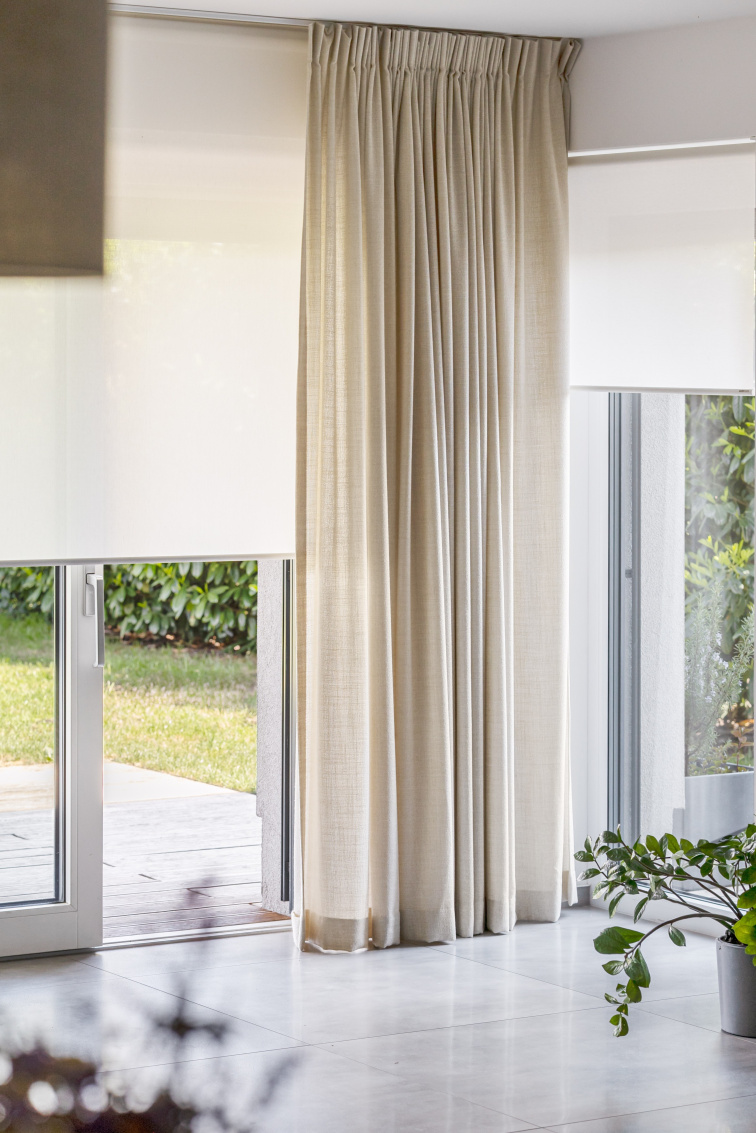
Practical impact: Light colors reflect light back into the room and outside, keeping the room lighter and cooler in summer. They also optically enlarge the space - a small room appears larger and airier. A light blind doesn't compete for attention and allows the other elements of the interior to shine.
When to choose them: Small rooms you want to optically enlarge. Windows facing south or west, where you need to reflect heat. Rooms where you spend a lot of time and want peace and light.
Dark colors
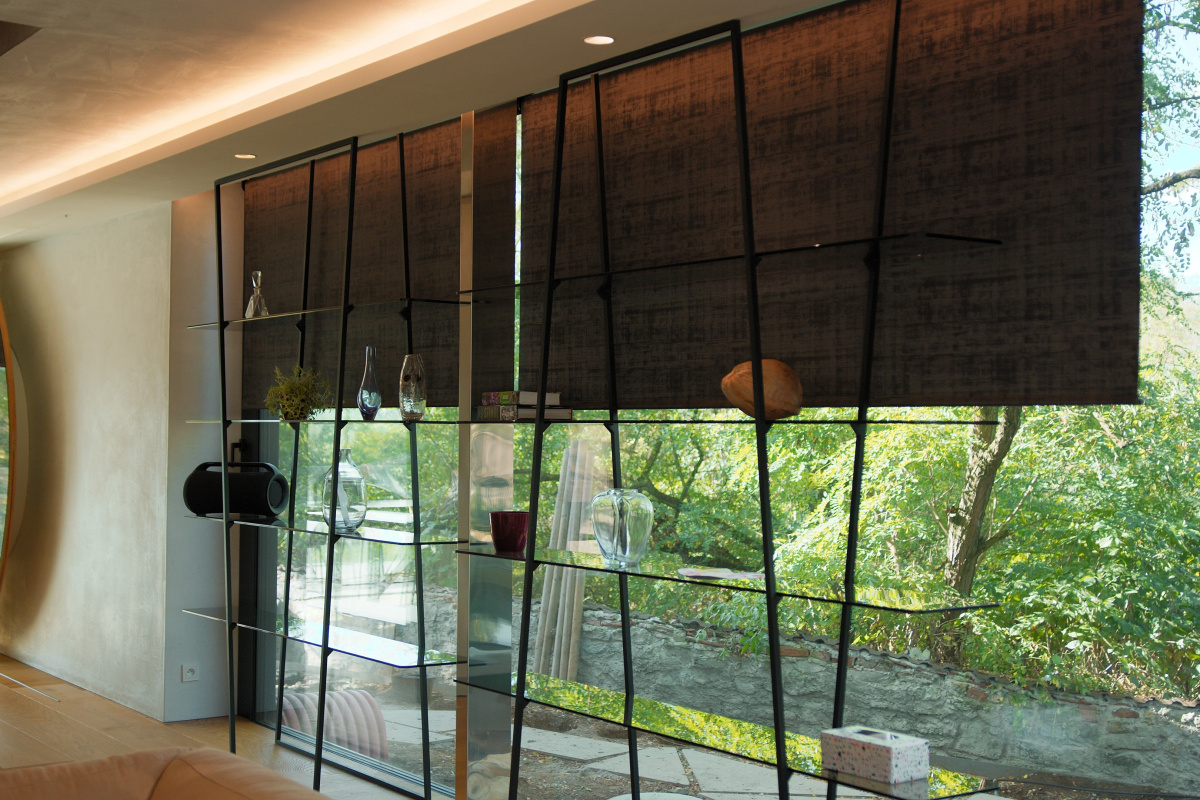
Psychological effect: Dark colors create a feeling of coziness, intimacy, and elegance. The room feels sophisticated and dramatic. Dark fabric adds depth and framework to the interior.
Practical impact: Dark colors absorb light and heat, making the room darker and warmer in summer. They optically reduce space, which can be an advantage in overly large rooms - they add coziness.
When to choose them: Large spaces you want to make cozier. North-facing windows where the light is not intense. Modern interiors where you want to create a dramatic effect.
Warning: In small rooms, dark colors can "compress" the space and feel stuffy. If in doubt, a light color is a safer choice.
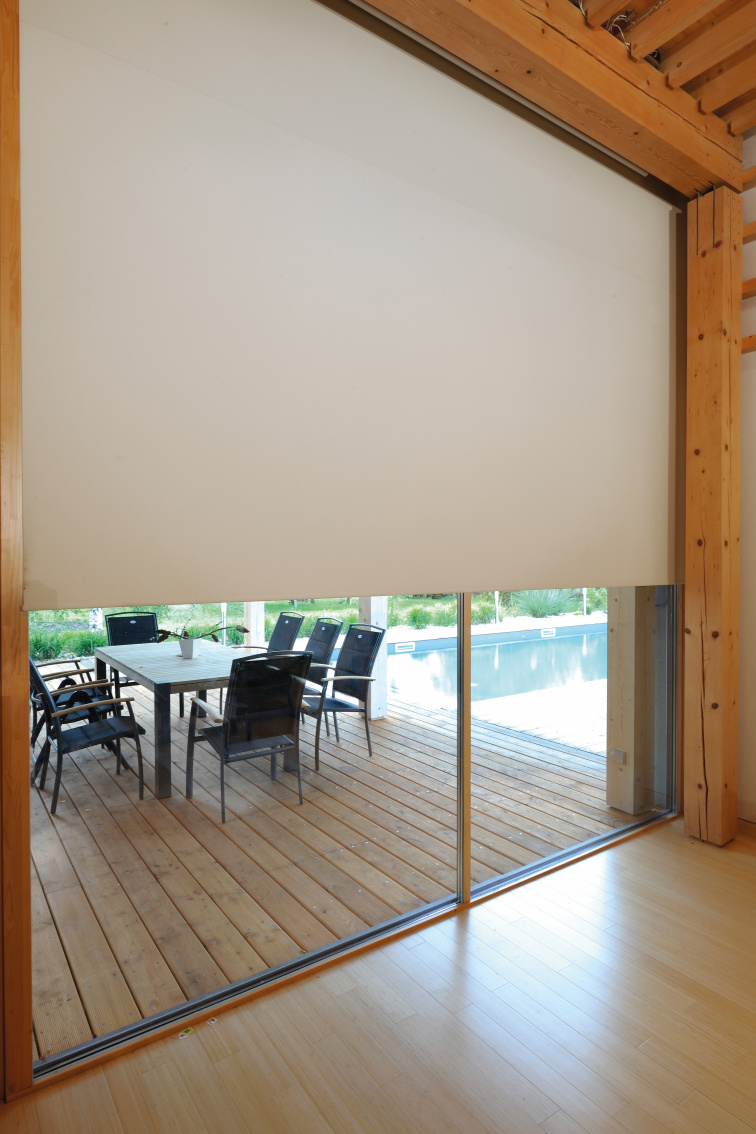
Neutral colors: A timeless choice for calm and harmony

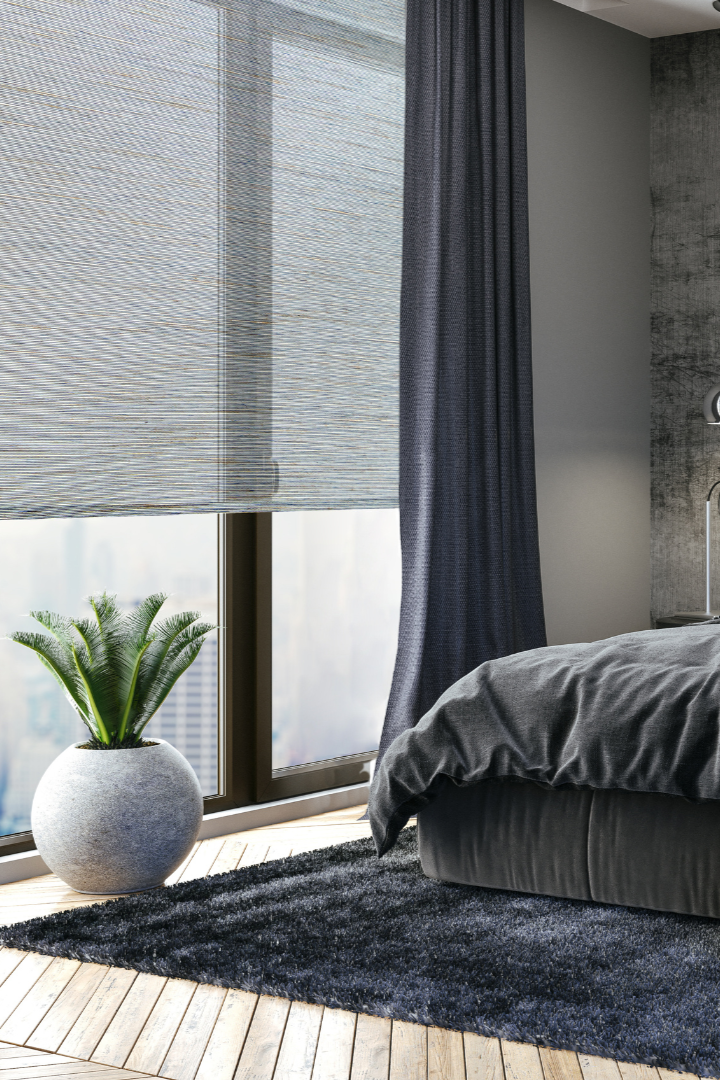
Why neutral colors work: They have a calming effect, are unobtrusive and easily combined with any furniture or interior style. They are timeless - you won't get tired of them even in a few years and they suit practically any room.
Difference between warm and cool shades: Even neutral colors have their shades. Warm neutrals (beige, cream, sand) create a cozy atmosphere and suit more classic or rustic interiors. Cool neutrals (pure white, cool gray) look modern, clean, and minimalist - perfect for contemporary interiors.
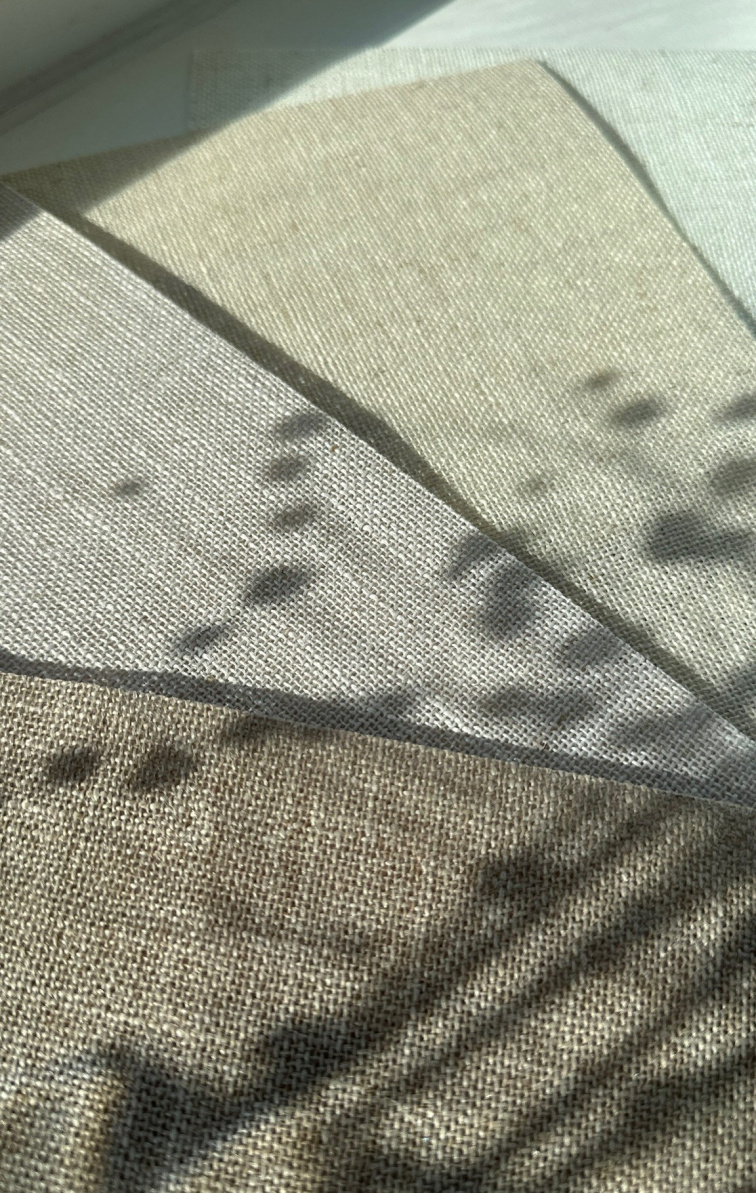
Tip: If you're unsure whether a shade is warm or cool, place it against a white sheet of paper. If the fabric looks yellowish or pinkish, it's warm. If bluish or grayish, it's cool.
Bold colors: Courage that has its rules
Green: The color of nature, calm, and regeneration. Subtle green shades (sage, eucalyptus) work great in bedrooms, where they promote rest. More vibrant green can be interesting in living rooms or studies.
Blue: Has a calming effect, promotes concentration and relaxation. Light blue is ideal for the bedroom or study, darker blue in the living room.
Ochre and terracotta: Warm earthy tones create a cozy, inviting atmosphere. They work great in living rooms or dining rooms, where you want to create a feeling of warmth and hospitality.
Note: Bold colors quickly become tiresome or may not match a change in interior. Today you may like bright ochre, but in two years, when you change the furniture, it may feel jarring.
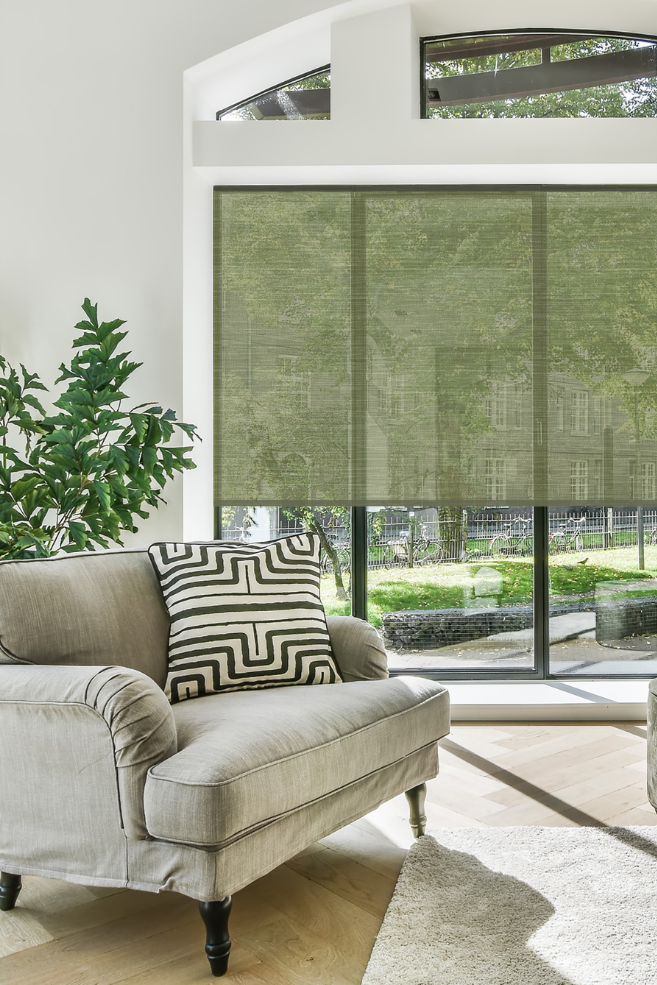
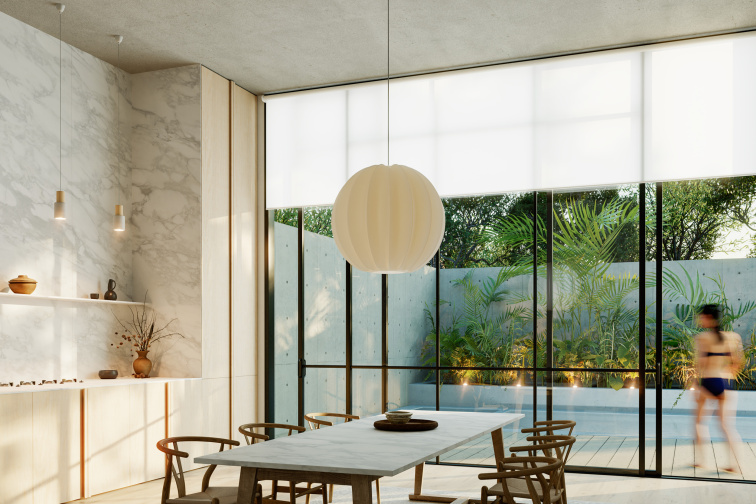
How the color of blinds affects the perception of space
Light colors optically enlarge the room
If you have a small space, a light blind will open it and make it feel airier. It works best combined with light walls - the whole room then appears larger.
Dark colors add depth
If you have a large room that feels empty or "cold," darker blinds will add coziness and structure. In too large spaces, dark color can be advantageous.
Warm shades create coziness
Beige, warm gray, or ochre create a feeling of warmth and comfort. Great for rooms where you want to feel safe and relax.
Cool shades feel clean and modern
Pure white or cool gray gives the room a fresh, minimalist look. Perfect for modern interiors and spaces where you want a sense of cleanliness and order.
Color by room: Practical recommendations
Each room has different needs - and the color of the blinds should respect that.
Bedroom: Choose calm, neutral, or muted colors. White, beige, light gray, or subtle blue/green will support quality rest. Avoid bold, energetic colors - they are more stimulating than calming.
Living room: Neutral or warm shades are the most common choice. Beige, light gray, or warm white create a pleasant atmosphere and add coziness for shared moments.
Study: Light, cool colors promote concentration and productivity. Pure white or light gray are ideal.
Children's room: Soft pastels or neutral colors are the best choice. Avoid too vibrant colors, which may be too stimulating for a child.
Kitchen: Practical light colors like white or beige are ideal. They are easy to maintain and reflect light, which is always a plus in the kitchen.
Most common mistakes when choosing color
Mistake 1: Choosing based on one detail
You choose a color that matches the new pillow or painting. In six months, you will replace the pillow, and the blinds no longer fit. The color of the blinds should match the overall style of the interior, not just one accessory.
Mistake 2: Underestimating natural light
The color of the blinds looks different in the morning, afternoon, and evening. With artificial and natural light. If you don't try a sample at home, you might be surprised after installation.
Mistake 3: Bold color without consideration
You like dark green or terracotta? Great - but realize that you will live with it for years. Bold colors get tiring quicker and are harder to combine when changing the interior.
Mistake 4: Ignoring the size of the room
Dark blinds in a small room will make it even smaller. Light blinds in a large room can take away coziness. Always consider the size of the space.
Check the color at home - samples decide

It often happens that a shade that looks nice on the screen or in a catalog at home in natural light seems completely different - lighter, darker, or with a different undertone. That's why it's best to assess the color directly in your home. The fabric behaves differently in the morning, than in the afternoon, and differently in the evening under artificial lighting. Place it by the window, observe how it filters light. Check if it matches the furniture and the overall atmosphere of the room.
At Accublind, you can order fabric samples and try them directly in your interior. It's the simplest way to be sure that the chosen color will work exactly as you expect. And good news? The price of the samples will be deducted from the final purchase, so it's an investment that pays off.
Color that creates atmosphere
The color of a fabric roller blind is not just a design matter - it's a decision that affects the light, space, and mood in the room. Light colors expand the space and bring calm, dark ones add depth and coziness. Neutral tones are a safe choice for any room, bold colors can be beautiful, but they require courage and a long-term commitment.
When choosing a color, always think about how you use the room, how much light you need, and what atmosphere you want to create. And if you're not sure? A sample on the window will show you the truth that no photo can replace.
Are you ready to find the color that suits your home? Explore our fabric collection and order samples – it's the best way to decide correctly.
FAQ
What color blinds are best for a small room?
Light colors (white, beige, light gray) will optically enlarge a small room and give it airiness. Dark colors would make the space look smaller.
Is a light or dark blind better?
It depends on the size of the room, the amount of daylight, and the desired atmosphere. A light blind is ideal for smaller or darker spaces where you want to keep as much light as possible. A dark blind is suitable for larger and brighter rooms where it adds depth, contrast, and a sense of coziness.
Are dark blinds suitable for a bedroom?
Yes, especially if you have blackout fabric. A darker shade can create a cozier atmosphere. However, choose muted, not bold colors - the latter are more stimulating.
How to tell if a color is warm or cool?
Place the sample against a pure white paper. If the fabric looks yellowish or pinkish, it's warm. If bluish or grayish, it's cool.