Window layering: A designer trick that will transform your interior
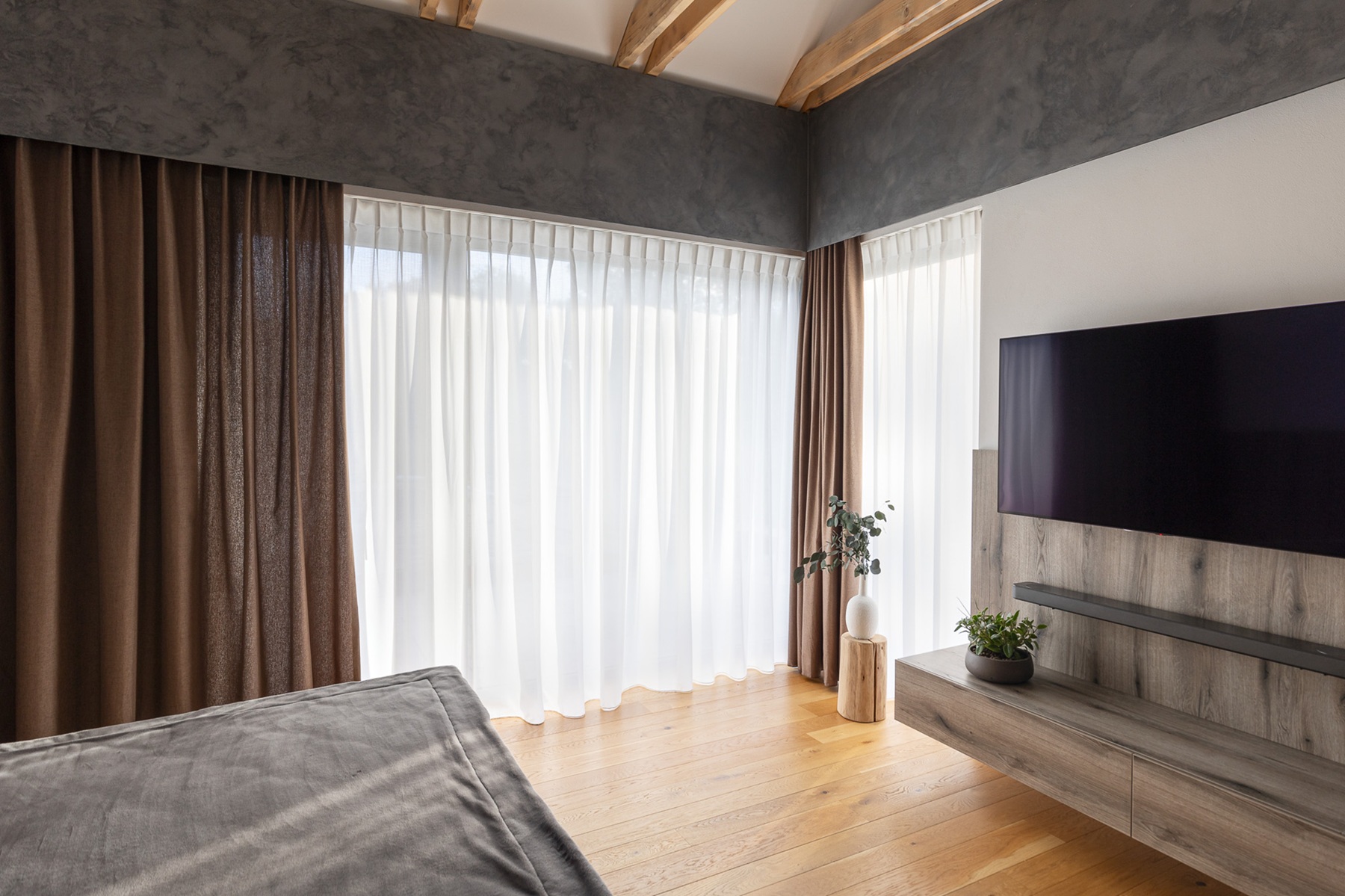
Window layering is a design trick that transforms ordinary windows into a luxurious interior element. Simply stroll through premium hotels or flip through home magazines - everywhere you will see perfectly layered textiles that create depth, coziness, and a sophisticated look. The good news? You can achieve exactly the same effect at home - without complicated interventions and without the space feeling overdone. You just need to understand how each layer works and how to combine them correctly.

Why does layering work (and why does it look so luxurious)?

Functionality and design go hand in hand:

Fabric roller blinds provide precise light control and privacy; sheer curtains soften harsh sunlight and create a gentle atmosphere; and drapes add an additional layer of thermal insulation, luxury, and a sense of framing around the window.

Dimension and depth:

The simple surface of a window suddenly gains a three-dimensional character. Different textures and layers create visual interest that brings a space to life and makes it feel larger.

Flexibility throughout the day:

Sheers in the morning, precise light control with blinds during the day, and coziness with drapes in the evening. Each layer plays its role, and you stay in control of the atmosphere at any given moment.

A sence of luxury:

Layering is typical for premium interiors. It's the kind of detail that separates an ordinary flat from a space with real character.

The golden rules of successful layering

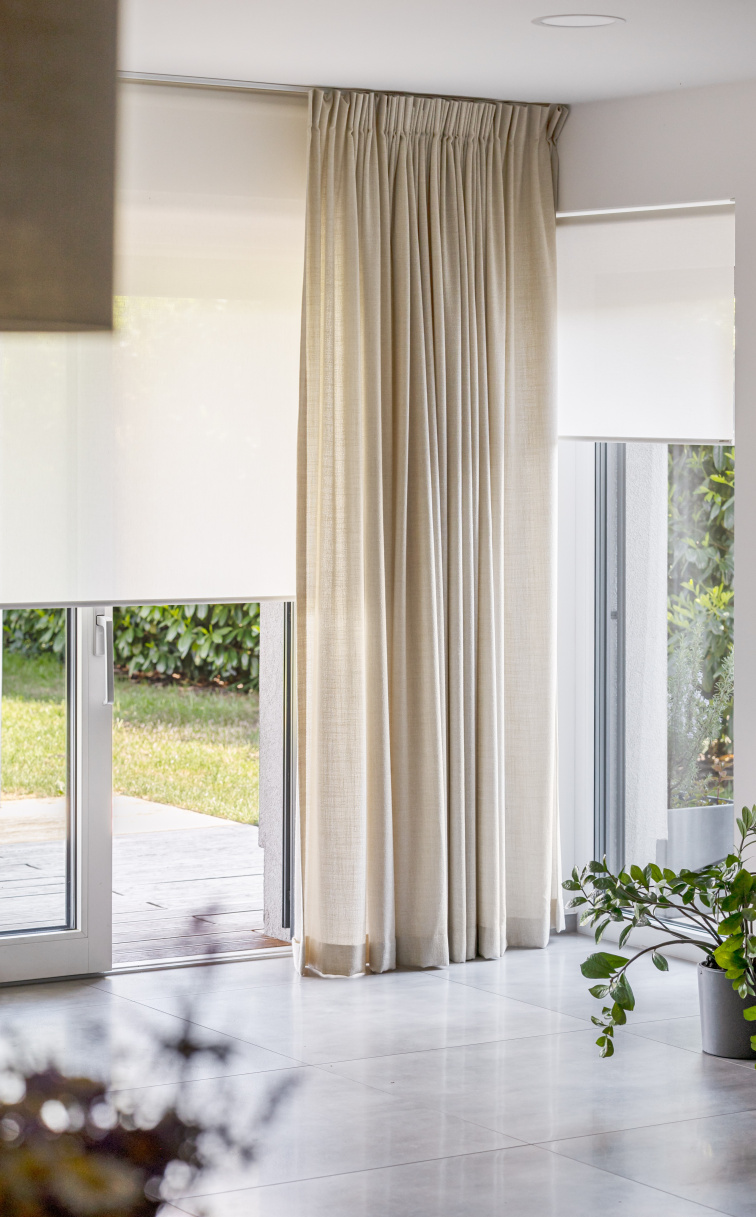
1. Fabric blind as the foundation of the whole composition

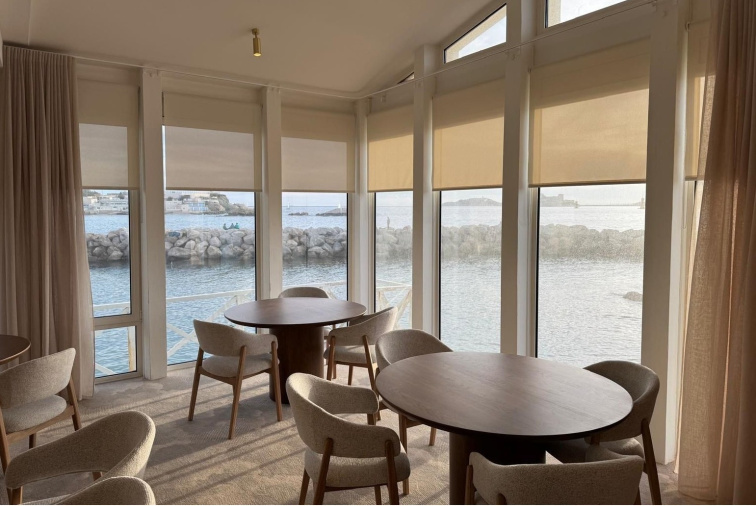
When it comes to layering window textiles, the fabric roller blind is the most important element. It acts as the primary functional layer - the one closest to the glass, doing the first work with light. Choosing it well is therefore essential:

Simple, clean lines: A minimalist cassette design works best, whether you're mounting in front of or inside the window recess. Ornate details would only create visual noise in a layered composition.

Neutral colors as a base: White, beige, gray, or soft earthy tones function as a canvas for other textiles.

The right type of fabric: Sheer or lightly translucent fabrics combine well with other layers. Blackout fabrics are ideal for bedrooms where complete darkness is required.

The greatest advantage of blinds is their clean look - they do not distract the interior and allow other textiles to shine. That's precisely why they pair so well with both sheers and drapes.
Blog 1767010254

2. Add curtains for softness and working with light

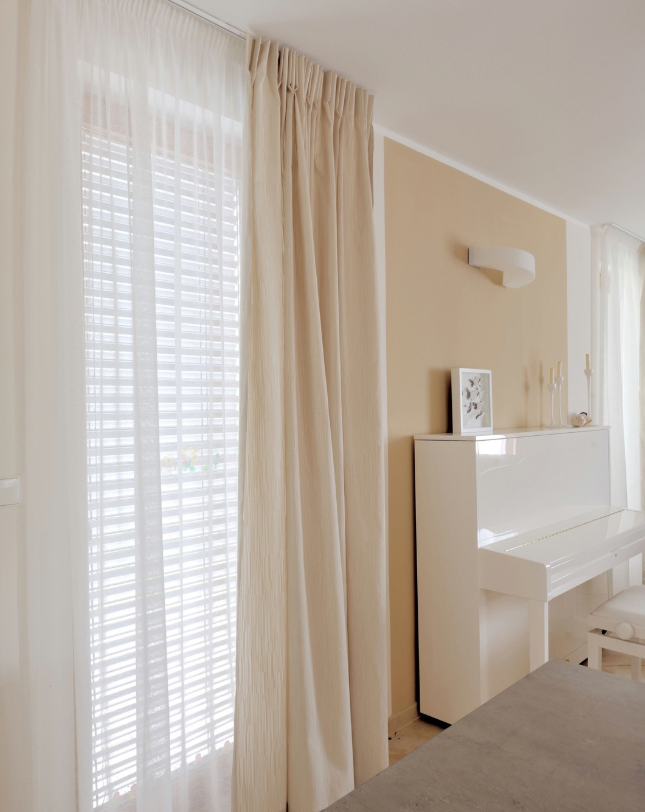
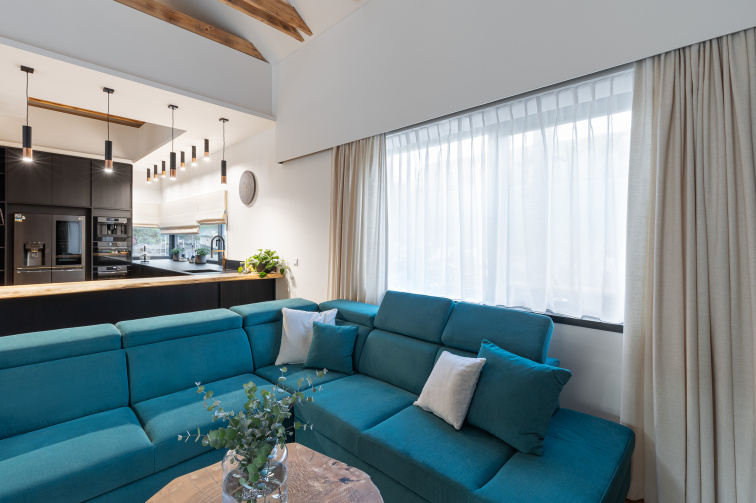
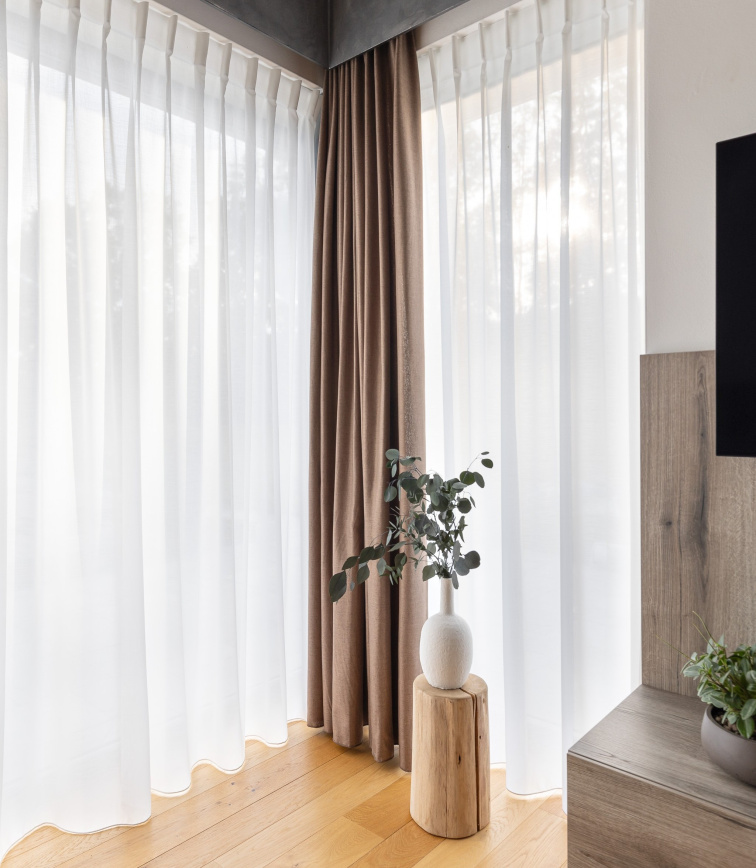
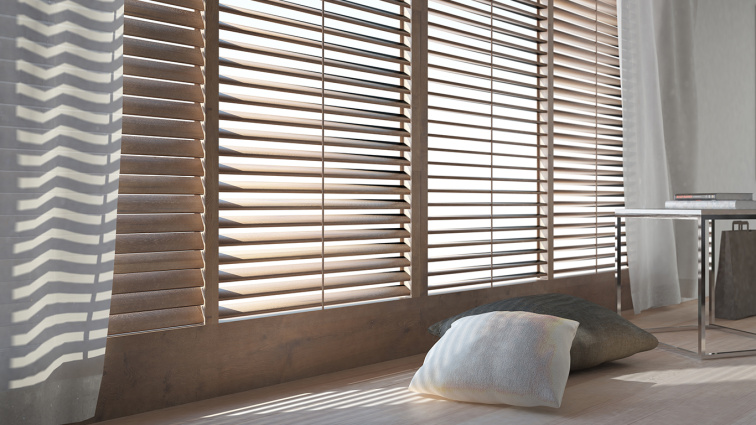
Sheers are the middle layer - they diffuse harsh daylight, soften the lines of the window, and bring a sense of airiness and elegance to the room.

Blog 1767010254

Curtain fabric: Linen, cotton voile, or sheer synthetic fabrics - they should allow light to pass through and create a soft, diffused atmosphere.

Length is important: For a luxurious look, curtains should reach the floor, ideally with a slight "break" –-they should be 2-5 cm longer than the distance from the rod to the floor. This creates an effortlessly elegant effect.

Width for richness: Sheers should be at least 1.5 to 2 times wider than the window. Generous fabric creates beautiful folds and a rich, full look.

3. Drapes as the crowning element

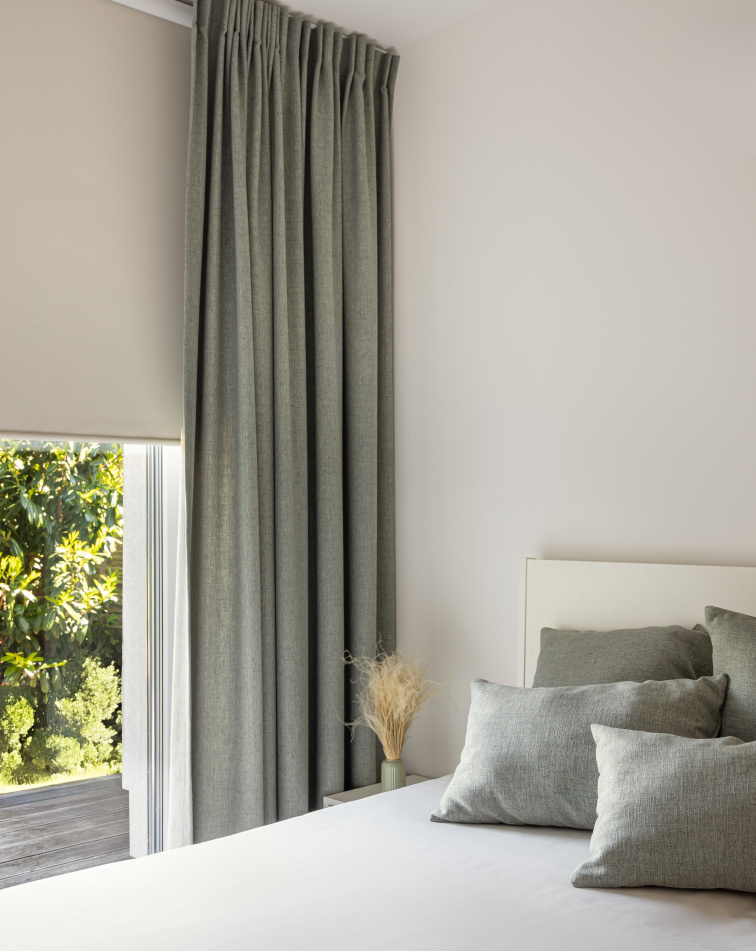
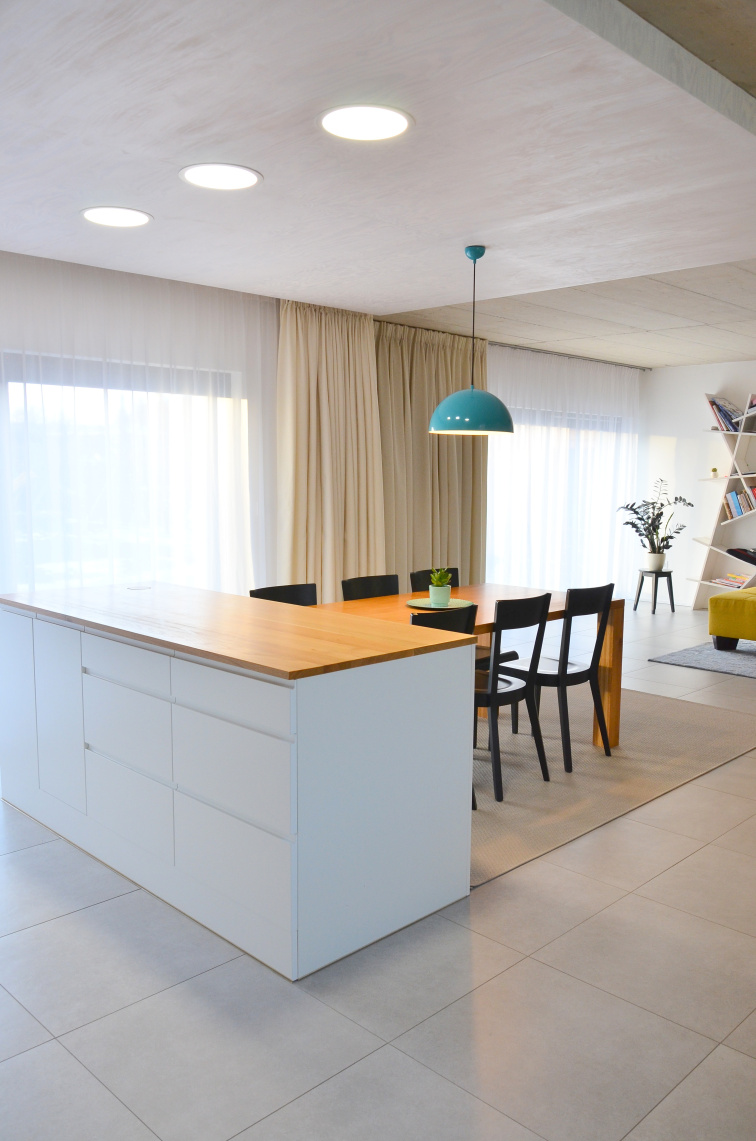
Drapes are the layer that takes an interior to the next level. They frame the window, adding depth, luxury, and warmth to the entire space.

When to use: Best suited to bedrooms, living rooms, and studies - spaces where you want to create a genuinely cosy, enveloping atmosphere.

Material and texture: Velvet, linen or rich cotton fabrics add a layer of thermal and sound insulation, and primarily visual richness.

Color and pattern: Here you can be bolder. While blinds and curtains are neutral, drapes can bring color, pattern, or pronounced texture.


Tip: If you're looking for a wide selection of curtains and drapes in various colors, materials, and structures, check out the offer from the Bematech company, which specializes in comprehensive interior shading solutions.
Blog 1767010254

Specific combinations according to style

Scandinavian minimalism:

White or light grey roller blinds form the clean base. Pair with a light white linen voile, and add drapes in natural tones - sand or warm grey - if needed. The result is a bright, airy space flooded with natural light, breathing effortless Nordic simplicity.

Classic elegance: 

Cream or beige roller blinds, a generous white embroidered voile, and drapes in velvet or damask in rich tones - burgundy, deep green, or navy. This approach evokes the luxury of a grand hotel and creates an opulent, timeless look.

Modern eclecticism: 

Smooth grey or graphite roller blinds paired with translucent sheers in warm tones - apricot, terracotta, mustard. Drapes with geometric or abstract patterns add boldness and personality. The result is an interior with real character that is anything but boring.

Cozy farmhouse style:

Natural beige or linen-toned roller blinds, rougher linen sheers in earthy colours, and drapes with a check or floral print. Together they create a warm, homely space full of comfort and charm.

Luxurious hotel-style:

White or cream roller blinds, two layers of sheers - a translucent voile plus a slightly heavier sheer - and finally drapes in velvet or silk in neutral but sumptuous tones. This is the ultimate in both luxury and cosiness combined.

Layering according to room

Living room: Roller blind + sheer + drape (full layering for a luxurious finish)

Bedroom: Blackout blind + drape (for maximum darkness and coziness)

Kitchen: Practical blind (easy to clean, no additional layers needed)

Study: Sheer blind + minimalist drape

Children's room: Blind as the main functional element, textiles as a complement

Bathroom: Moisture-resistant blind (additional layers are not recommended due to moisture) or shutters

Common mistakes to avoid

Too many patterns and colors: If you are combining multiple layers, let at least one or two be single-colored. Three different patterns at once can seem chaotic. The rule is simple - if you have patterned drapes, leave the curtains and blinds solid.

Incorrect length of drapes and curtains: Short curtains or drapes ending above the floor seem cheap and ruin the entire effect. Always choose the length to reach the floor, ideally with a slight excess that creates an elegant "break." This is the detail that separates a professional result from an amateur one.

Inappropriately chosen type of blind fabric: If you're planning to add light-diffusing sheers, you can opt for a translucent or lightly filtering blind fabric. In a bedroom or anywhere complete blackout is needed, go for a blackout fabric. The key is always to think about how the layers will work together. 

The effort to "solve everything with one element": Layering is not about having everything at the window all the time. It's about flexibility - the ability to change the room's atmosphere as needed. If you try to choose one "universal" layer, you lose precisely this advantage.

Too heavy materials in small spaces: In small rooms, choose lighter materials and lighter colors. Velvet drapes in dark tones can make a small space look even smaller. Rather opt for light linen or cotton.

Maintenance demands: More layers mean more washing and care. Before deciding on full layering, consider whether you have time for maintenance.

In conclusion: Balance is the key to luxury

Window layering brings together the best of both worlds - practical control over light and privacy, combined with the visual richness that elevates an interior to a higher level. It's not about adding as much as possible around a window, and it's not a complicated undertaking. It's about thoughtful balance, where every layer has its purpose and together they create a harmonious whole.

Start with quality ACCUBLIND fabric roller blinds as your functional foundation, and gradually build up the layers to suit your personal style and needs - whether that means delicate sheers or more statement drapes to complete the atmosphere. And remember - the best interiors are always created gradually, with an eye for detail and a little patience.